Science is not just about labs, formulas, or astronauts on the moon—it’s the force behind the smartphones in our hands, the clean energy powering our homes, and the medicine keeping us healthy. As we navigate through 2025, science continues to shape our lives in ways most of us don’t even realize.
Let’s explore how modern scientific discoveries are changing the world around us—and what exciting innovations the future holds.
🌍 Climate Science: Saving the Planet, One Discovery at a Time
Climate science is one of the most urgent fields of the 21st century. In 2025, we’re witnessing incredible breakthroughs aimed at reversing environmental damage:
- Carbon Capture Technology: New systems are being built to remove CO₂ directly from the air, helping slow global warming.
- Sustainable Energy Solutions: Solar panels, wind farms, and next-gen nuclear reactors (like fusion power) are becoming more efficient and affordable.
- Smart Agriculture: Scientists are engineering drought-resistant crops and sustainable fertilizers to feed a growing population.
The message is clear: science is leading the fight against climate change, giving us hope for a greener planet.
🚀 Space Exploration: The New Frontier
Space science has captivated human imagination for centuries. But in 2025, what was once science fiction is now reality:
- Mars Missions: Space agencies like NASA and private companies like SpaceX are working towards establishing human presence on Mars.
- Space Tourism: Commercial space flights are no longer fantasy—wealthy tourists have already orbited the Earth, with plans for moon trips underway.
- Space Telescopes: Advanced telescopes like the James Webb Space Telescope are unlocking the secrets of distant galaxies, black holes, and the origins of our universe.
Space exploration in 2025 is not just about discovering new planets—it’s about finding our place in the cosmos.
🧬 Medical Science: Healing in Revolutionary Ways
Perhaps no field of science touches our lives more directly than healthcare. In 2025, modern medicine is achieving the unthinkable:
- CRISPR Gene Editing: Scientists are now editing human genes to potentially cure inherited diseases like sickle cell anemia and cystic fibrosis.
- Personalized Medicine: AI-powered diagnostics create treatment plans tailored to your DNA, lifestyle, and health history.
- Wearable Health Tech: Smartwatches and biosensors monitor your vital signs in real-time, helping detect illnesses before symptoms appear.
Medical science today is about prevention, personalization, and precision—giving people longer, healthier lives.
🤖 Artificial Intelligence in Science
AI is transforming the scientific process itself. In 2025, researchers are using AI to:
- Predict climate patterns and natural disasters
- Discover new drugs by analyzing millions of chemical compounds in seconds
- Automate data analysis in particle physics and astronomy
- Build robotic assistants for surgical procedures and laboratory work
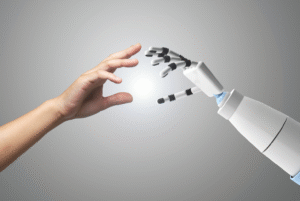
With AI’s help, scientists can tackle complex problems faster and smarter than ever before.
🔍 Everyday Science You Didn’t Notice
Science isn’t just happening in grand labs or space stations. It’s around you every day:
- Your smartphone GPS relies on satellite physics and atomic clock science.
- Food preservatives and packaging are developed by chemists to keep your meals fresh.
- Traffic signals use algorithms and sensors to optimize city traffic flow.
- Even your morning cup of coffee benefits from agronomy research that perfected the beans.
Science quietly makes life better, even in the smallest details.
🔮 What’s Next in Science?
Looking ahead, here are some exciting scientific questions researchers are working to solve:
- Can we make clean nuclear fusion energy practical and widespread?
- Will we discover life on another planet or moon?
- Can quantum computers solve problems that traditional computers cannot?
- Will artificial organs and bioprinting eliminate organ transplant waiting lists?
- How can we stop or reverse aging at the cellular level?
The answers to these questions could transform human civilization as we know it.
💡 Final Thoughts: Why Science Matters
In 2025 and beyond, science remains the foundation of human progress. From tackling global challenges like climate change and disease, to inspiring us with space exploration and AI, science touches every part of our lives.
And the best part? Science is for everyone. Whether you’re a student, a teacher, a business leader, or simply curious about the world—you’re part of this incredible journey of discovery.
So next time you charge your phone, board a plane, or drink purified water—take a moment to thank the power of science that made it possible.